Smart-Home Grasshopper Farm

What?
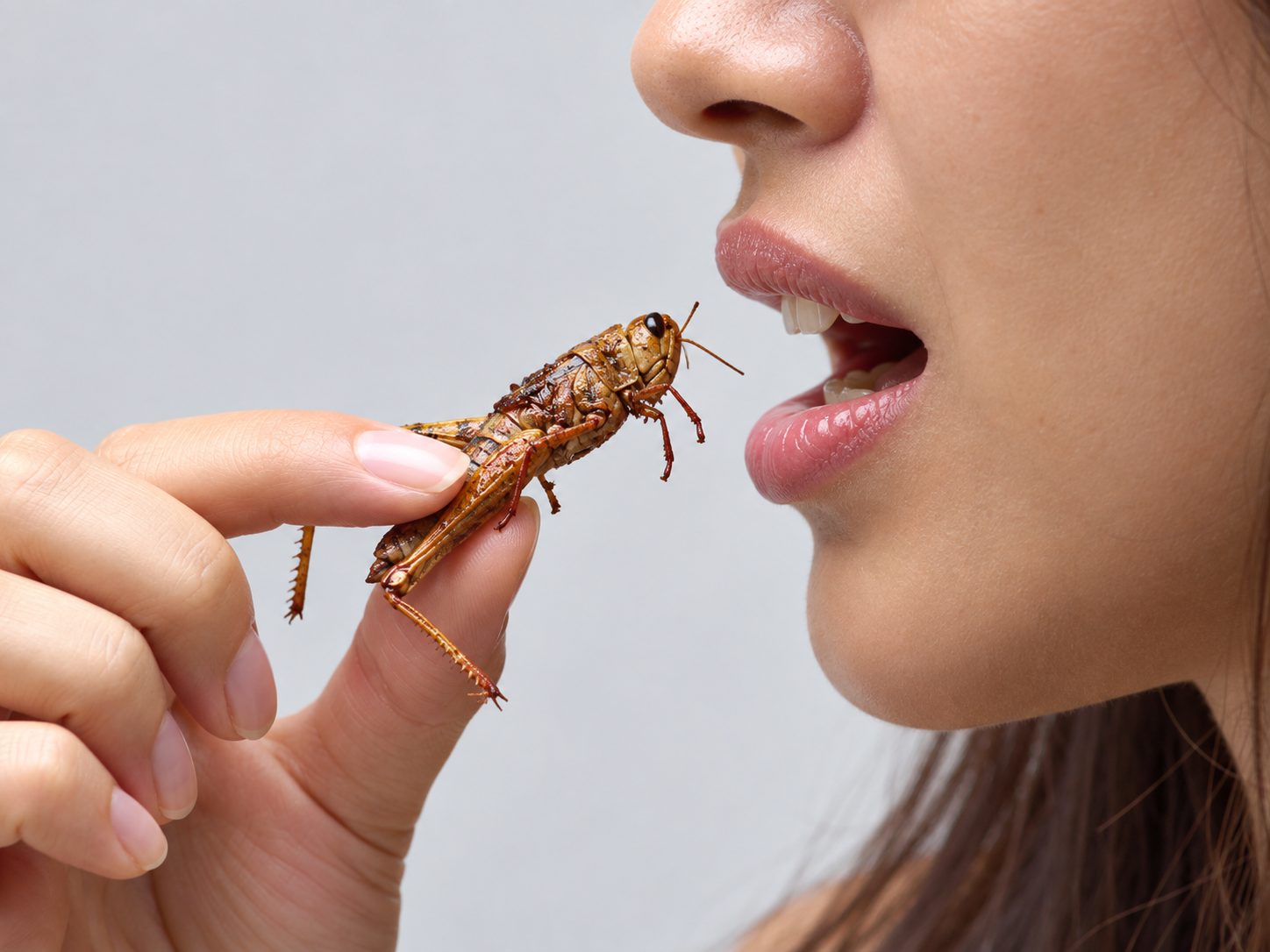
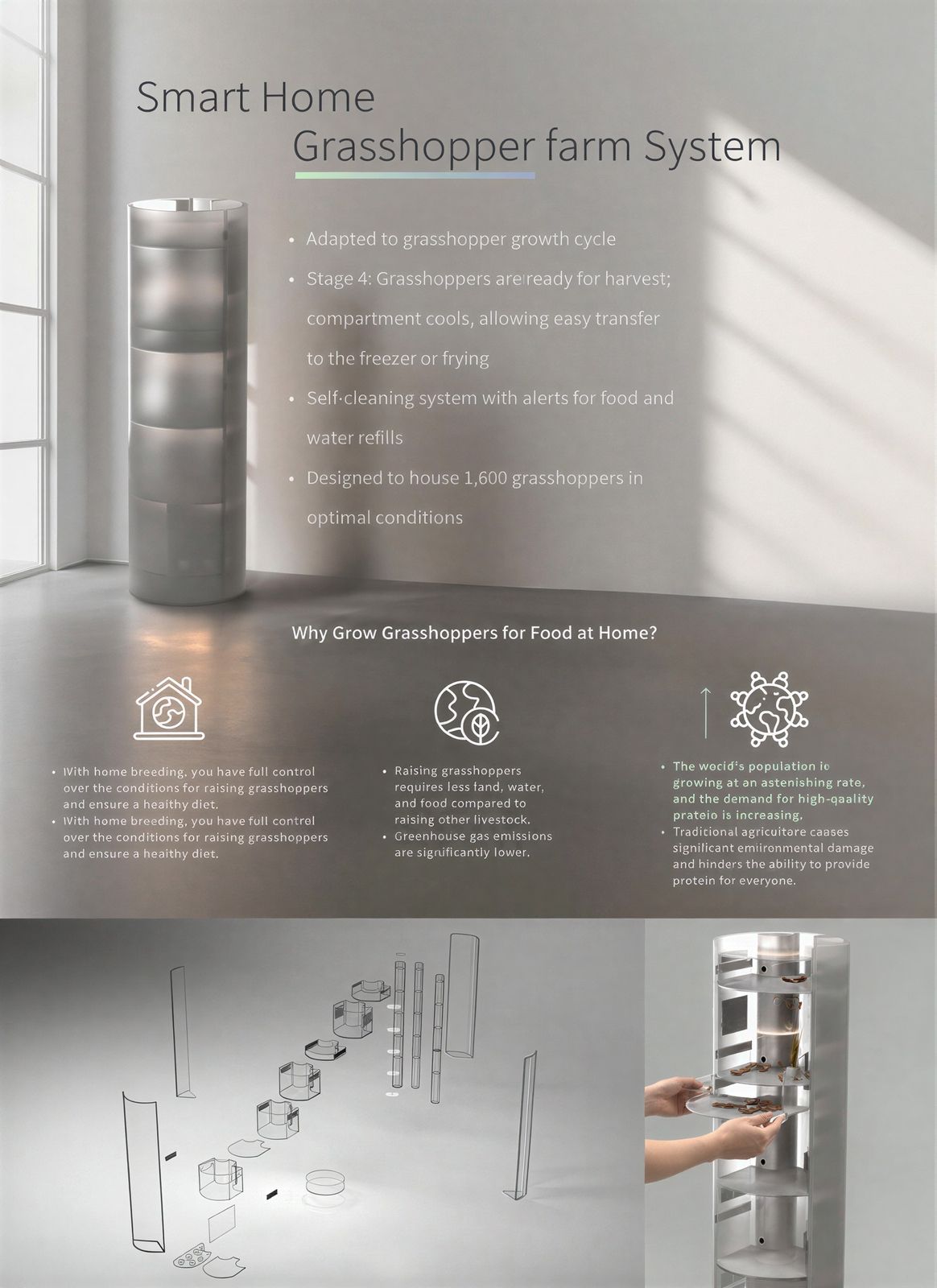
A home breeding system for grasshoppers as a source of protein.
Why?
A speculative question from an Off-Grid course: what if animal protein becomes harder to access? Grasshoppers are a particularly efficient option for small-scale food production.
How?
Research into breeding, behavior and life cycle, including a conversation with Dror Tamir, CEO of Hargol, shaped habitats for each growth stage with controlled climate, food, water, waste collection and a cooled harvesting compartment.
Read the full story
Developed as part of an Off-Grid design course, the project began with a speculative question: what happens if conventional animal protein becomes harder to access in the future?
I chose to explore protein scarcity and researched alternative sources, which led me to grasshoppers as a particularly efficient option for small-scale food production. From there, I developed the idea of a domestic breeding system.
The design was shaped by research into grasshopper breeding, behavior, environmental needs and life cycle, including a conversation with Dror Tamir, CEO of Hargol. The final system is divided into habitats adapted to different growth stages, with controlled temperature, humidity and ventilation, integrated food and water, breeding areas, waste collection and a cooled compartment for harvesting.